
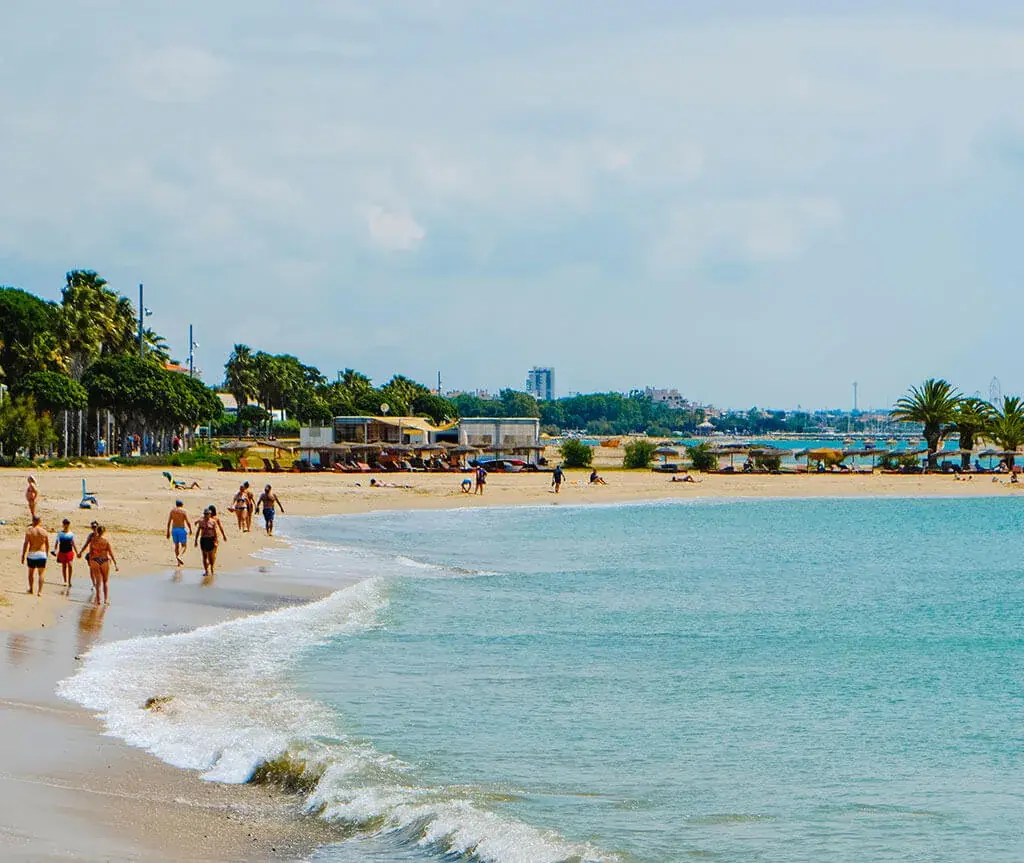
Where is the Costa Dorada? A map, what to see and a driving route from Calafell
Quick answer
The Costa Dorada is the coastline of the province of Tarragona, in southern Catalonia, Spain. According to Turisme de Catalunya, it runs from Cunit to Vandellòs i l'Hospitalet de l'Infant and takes in six comarques, or counties. In Catalan it's the Costa Daurada, the name of the official tourism brand, which comes from the golden colour the sun gives the sand. What to see on the Costa Dorada, in five names: Roman Tarragona, the Pont del Diable, Tamarit Castle with the Camí de Ronda, Poblet Monastery and PortAventura World.
Map of the Costa Dorada and the Tarragona coast
The map follows the coast from north to south: Cunit, Calafell, El Vendrell and Coma-ruga, Torredembarra, Altafulla, Tarragona, Salou, Cambrils, Mont-roig del Camp and L'Hospitalet de l'Infant. Inland you'll see Reus, Poblet Monastery, Siurana and the Priorat, with Barcelona at the top for reference. Calafell comes just after Cunit if you're arriving from Barcelona. To the south, in a separate inset, are the Ebro Delta and Miravet: they belong to the Terres de l'Ebre, which has a brand of its own.
Illustrated map of the Costa Dorada to be added
From the hotel: airports and train
Barcelona-El Prat airport
About 45-50 minutes by car
Reus airport
About 38 minutes by car
Calafell station (Rodalies R2)
About 9 minutes on foot
The hotel's address is Avda. Sant Joan de Déu, 119, 43820 Calafell (Tarragona). For the rest of your journey, our Calafell guide explains how to get to Calafell by train, plane or car.
What to see on the Costa Dorada: the must-sees
What is there to see along the Tarragona coast, and what's worth visiting inland? The Costa Dorada's sights mix Roman remains, Cistercian monasteries, seaside and mountain villages and paths that hug the shore. This list of the best of the Costa Dorada opens with Roman Tarragona and its aqueduct, follows the coast from Altafulla to Cambrils and ends inland and in the Terres de l'Ebre.
Your starting point already has an archaeological site of its own: Calafell's Ciutadella Ibèrica, a settlement of the Cossetani Iberians rebuilt on its original site, facing the sea. It's covered, along with the rest of the town, in our guide to what to see and do in Calafell.
Roman Tarragona: the amphitheatre, Praetorium, circus and cathedral
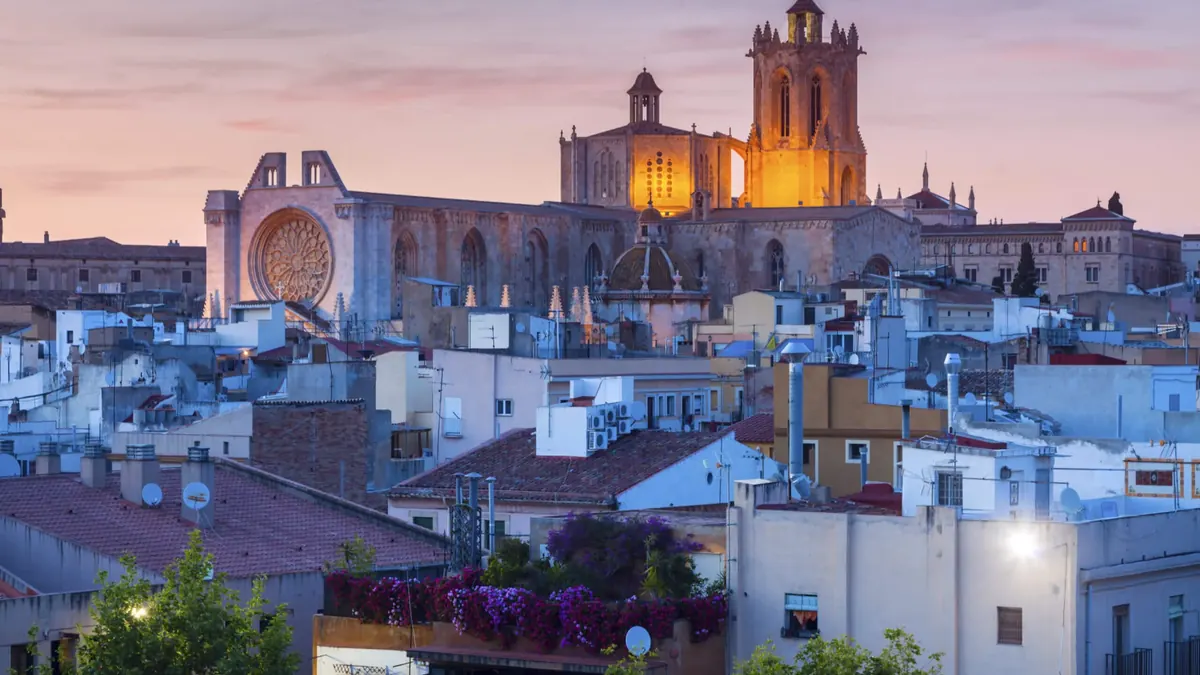
Tarragona was Tarraco, and its archaeological ensemble has been a UNESCO World Heritage Site since 2000. It is made up of fourteen monuments, eleven of them within Tarragona itself, such as the 2nd-century amphitheatre on the shores of the Mediterranean, the circus, the Provincial Forum with the Praetorium, and the Roman walls. At the top of the old town, work began on the Gothic cathedral in 1184. In May, the Tarraco Viva festival fills these settings with historical re-enactments, talks and workshops.
Les Ferreres Aqueduct, or the Pont del Diable
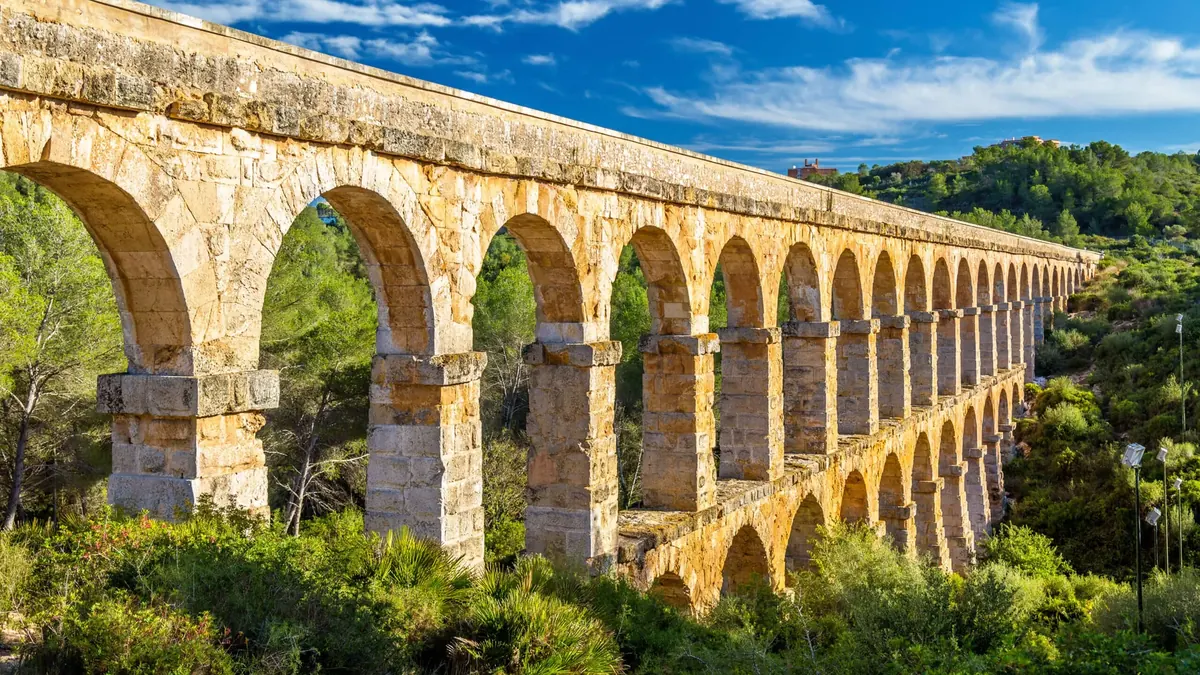
On the outskirts of Tarragona, the Les Ferreres aqueduct, which everyone calls the Pont del Diable (Devil's Bridge), is another of the monuments in the Tarraco World Heritage ensemble. You can see it on a short walk among the pines.
- Who it suits: a quick stop on the way to Tarragona or on the way back.
Altafulla, Tamarit Castle and the Camí de Ronda
The Costa Dorada's camins de ronda are the old paths along the sea that now follow the GR 92 long-distance trail. The stretch from Tarragona to Tamarit crosses Platja Llarga and the Bosc de la Marquesa woods, an area of natural interest that includes Cala Fonda (known as Waikiki); it passes Punta de la Móra, with its tower built to guard against pirates, and reaches Tamarit Castle, documented since the 11th century. Along the sand from Tamarit you can carry on to Altafulla, which has its own entry in charming villages of the Costa Dorada.
Salou and PortAventura World
Salou, on the Costa Dorada, has shallow beaches of fine sand, according to Turisme de Catalunya. Between Salou and Vila-seca is PortAventura World, which the same source describes as the most visited theme park in Catalonia.
Cambrils and Parc de Samà
According to Turisme de Catalunya, Cambrils harbour is one of only three on this coast with a fishing industry of some size; the other two are Tarragona and Calafell. On the outskirts, Parc de Samà is a Romantic park commissioned in 1881 by Salvador Samà, Marquis of Marianao, with a lake and a Gothic-inspired temple on a column of rock.
- Who it suits: an afternoon stroll for everyone.
Reus and Modernisme
Reus, capital of the Baix Camp, is Antoni Gaudí's birthplace, and the Gaudí Centre tells his life story. Modernisme, the Catalan take on Art Nouveau, fills the centre, with buildings by Lluís Domènech i Montaner such as Casa Rull and the Institut Pere Mata, and the Gaudí Route links the places in the city connected with the architect.
Poblet Monastery and the Cistercian Route
Poblet is a Cistercian monastery, a World Heritage Site and the resting place of the kings of the Crown of Aragon, and it is home to a community of monks once again. Together with Santes Creus and Vallbona de les Monges, the latter in the province of Lleida, it forms the Cistercian Route (Ruta del Císter). Close by, Montblanc keeps its medieval walls.
Siurana and the Priorat
Siurana, part of the municipality of Cornudella de Montsant, was the last Muslim stronghold in Catalonia. Its Romanesque church of Santa Maria sits on top of a crag, with the reservoir below. All around is the Priorat: mountain vineyards and the DOQ Priorat wine appellation. If you'd rather not go too far, there are the Penedès wineries near Calafell.
The Ebro Delta and Miravet, in the Terres de l'Ebre
To the south, beyond the Costa Dorada, the Terres de l'Ebre have been a UNESCO Biosphere Reserve since 2013. The Ebro Delta Natural Park brings together rice fields that change colour with the seasons, wetlands and birdlife. Upriver, at Miravet, the Templar castle towers over the village and the Ebro.
What to do on the Costa Dorada, depending on your plans
Where should you go on the Costa Dorada? It depends on who you're travelling with and what you're looking for:
With children
PortAventura World, the Ciutadella Ibèrica and Calafell Beach. Calafell, Salou, Cambrils and El Vendrell hold the Government of Catalonia's Family Tourism Destination certification, and you'll find more ideas among the activities in Calafell for a Costa Dorada holiday with children.
As a couple
The Camí de Ronda and Tamarit at sunset, Siurana and, to round things off, a Romantic Getaway in Calafell with dinner for two at the hotel.
Culture
Roman Tarragona, Poblet and Santes Creus, and the Modernisme of Reus.
Nature
The Camí de Ronda around Punta de la Móra, the Prades mountains and the Montsant range and, to the south, the Ebro Delta.
Wine
The Priorat and Montsant inland and, right next to Calafell, the Penedès. Hotel Akquaaa is a member of the Penedès Wine Route (Ruta del Vi del Penedès): our guide to Penedès wineries will help you choose, and the Gourmet Getaway in Calafell takes care of dinner.
A three-day Costa Dorada road trip from Calafell
A road trip through Catalonia, centred on the Costa Dorada and with a single base: stay at Hotel Akquaaa in Calafell, with no need to repack. It's a three-day break in Catalonia that mixes history, monasteries, vineyards and the sea.
1Day 1: Calafell and Roman Tarragona
- Morning: the Ciutadella Ibèrica and a stroll along Calafell's seafront promenade.
- Afternoon: Roman Tarragona, from the amphitheatre to the Praetorium, the circus and the cathedral, with the Pont del Diable on the way back.
2Day 2: Poblet, Siurana and the Priorat
- Morning: Poblet Monastery.
- Afternoon: Siurana and the Priorat vineyards. It's the day that stands out most, the one that turns the trip into an unusual break in Catalonia.
3Day 3: Modernista Reus and Cambrils harbour
- Morning: the Modernisme route in Reus.
- Afternoon: Cambrils harbour, its seafront promenade and Parc de Samà, before heading back to Calafell.
If you're planning a weekend drive in Catalonia, keep days 1 and 3. If you have a day to spare, spend it in the Ebro Delta, on a day out among the Penedès wineries or on the weekend of coastal and inland villages suggested in our villages guide.
Costa Brava or Costa Dorada? How they differ
The Costa Brava and the Costa Dorada are Catalonia's two coasts on either side of Barcelona, and they're not alike.
Costa Brava
- Where it is
- Province of Girona, north of Barcelona
- Coastline
- Coves among rocks and cliffs, with pine woods almost down to the sea
- Heritage
- Medieval villages such as Pals, Girona's old quarter and the legacy of Dalí
- Who it suits
- Anyone after coves and fishing villages
- Hotel Akquaaa
- Not here
Costa DoradaThe hotel is here
- Where it is
- Province of Tarragona, south of Barcelona
- Coastline
- Long beaches of fine golden sand, with coves on some stretches, such as the Camí de Ronda
- Heritage
- Roman Tarragona and the Cistercian monasteries
- Who it suits
- Families, and anyone combining sandy beaches with cultural visits
- Hotel Akquaaa
- In Calafell, on the seafront
Sand and Roman heritage on the same trip: the Costa Dorada; coves among the rocks: the Costa Brava. To pick your stretch of sand here, see the best Costa Dorada beaches.
When to go to the Costa Dorada: what each season offers
The climate is Mediterranean, with hot, dry summers and mild winters, and every season has something to offer:
Spring (May)
Good weather for walking, quiet beaches, cultural visits and Tarraco Viva.
Summer
Beach season, and each coastal town's Festa Major, its main annual festival.
Autumn
Grape harvest in the Priorat and the Penedès, Santa Tecla in Tarragona in September and quieter beaches.
Winter
Tarragona and Poblet with fewer visitors, and the Christmas markets in Tarragona; in Calafell, Christmas and New Year by the sea.
In summer, hotel guests can also use Hotel Akquaaa's Beach Club, right by the sea. The dates of each festival are in Calafell's festival calendar.
More Costa Dorada guides
The coast's beaches, to alternate with Calafell's.
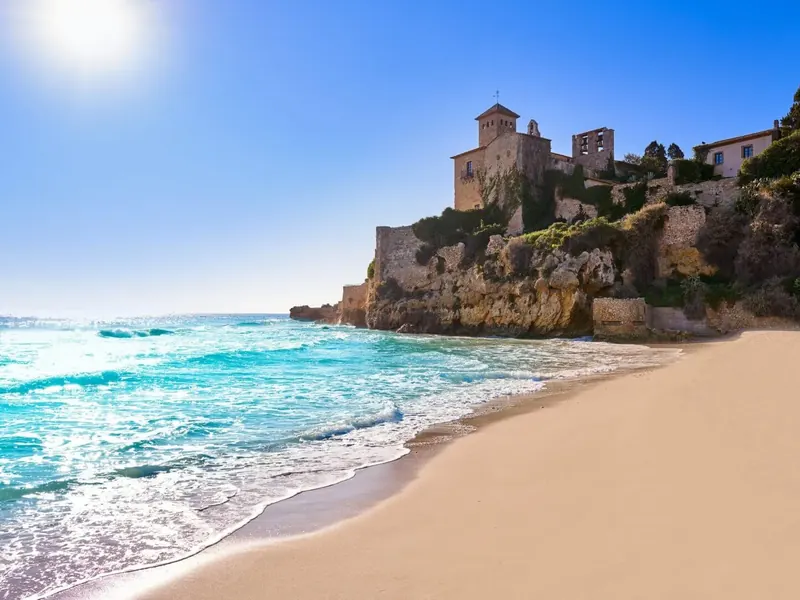
The city's beaches and coves, from Miracle Beach to Tamarit.
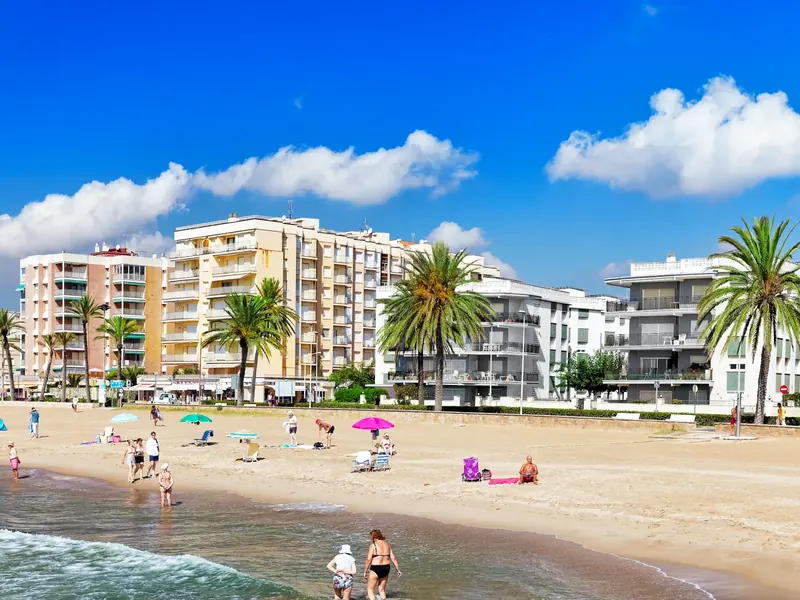
Altafulla and other villages that only get a brief mention here.

The wine country right next to the hotel.
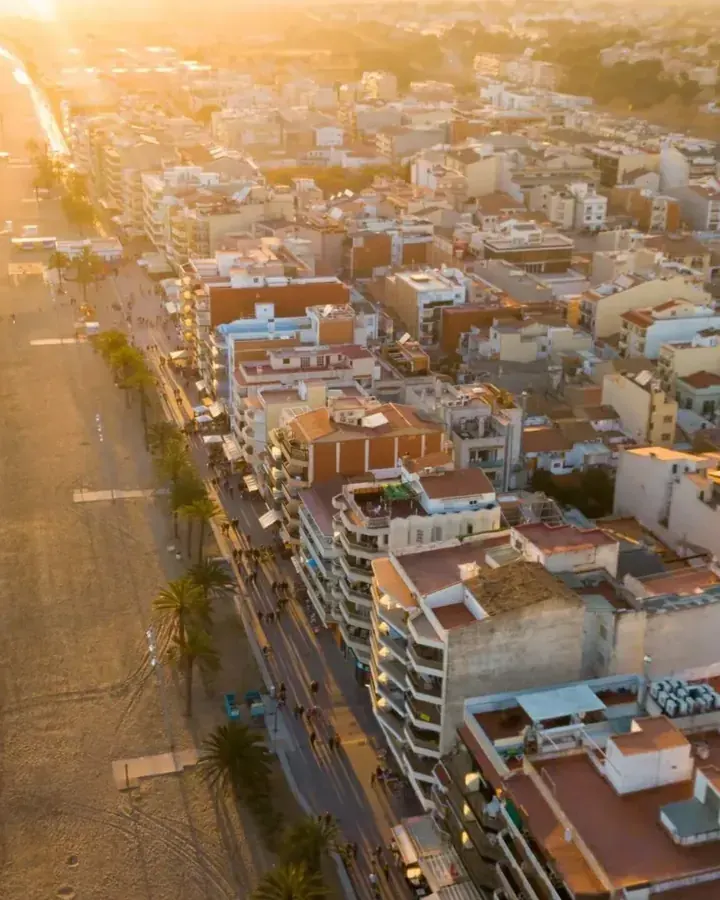
The town where the hotel is.
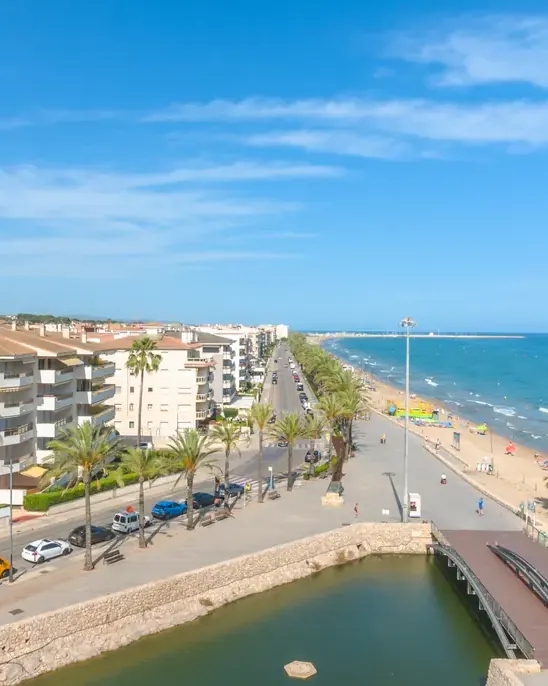
Calafell beach and its promenade
The beach and the promenade, in detail.
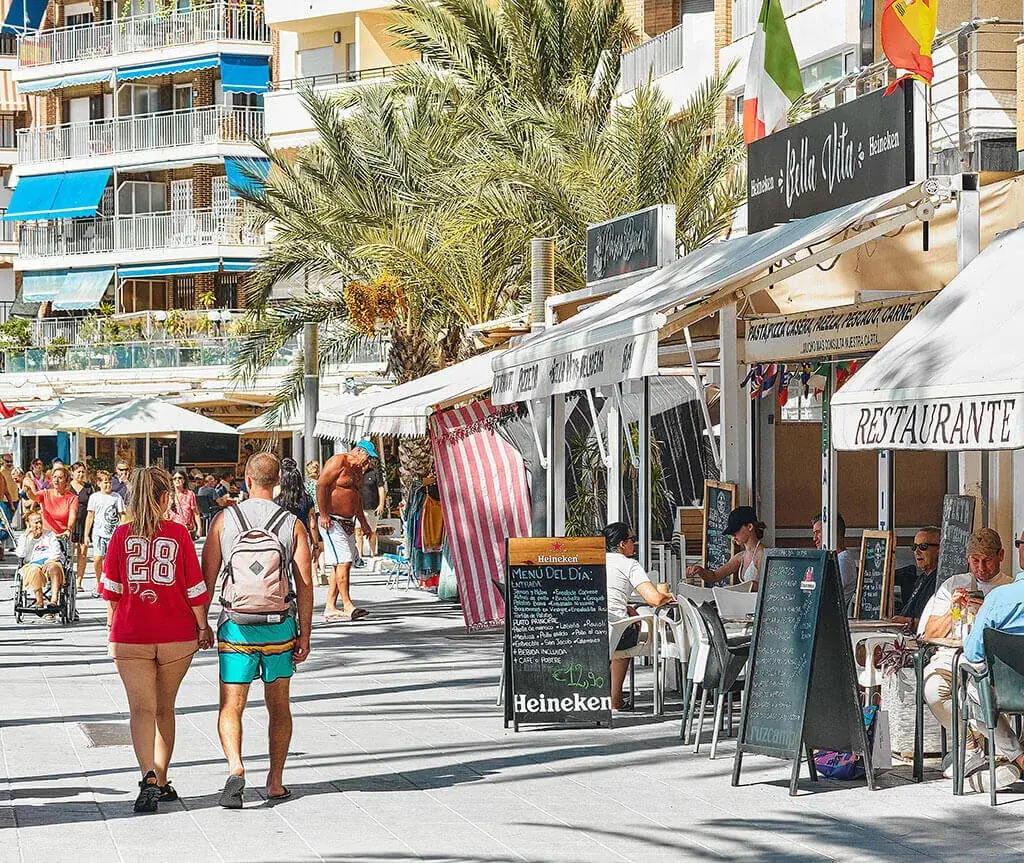
Calafell, your base on the Costa Dorada: Hotel Akquaaa
To explore the coast without changing hotels, Calafell sits between Barcelona and Tarragona, and Hotel Akquaaa, a 4-star hotel, looks out over the Mediterranean from the seafront. Some of Hotel Akquaaa's rooms have sea views, and three of the room categories come with a terrace of their own: the Attique Room, the Superior Room with a terrace and the Deluxe Room with a private terrace. The hotel stays open in winter, and the buffet breakfast, which isn't included, can be added when you book your room.
